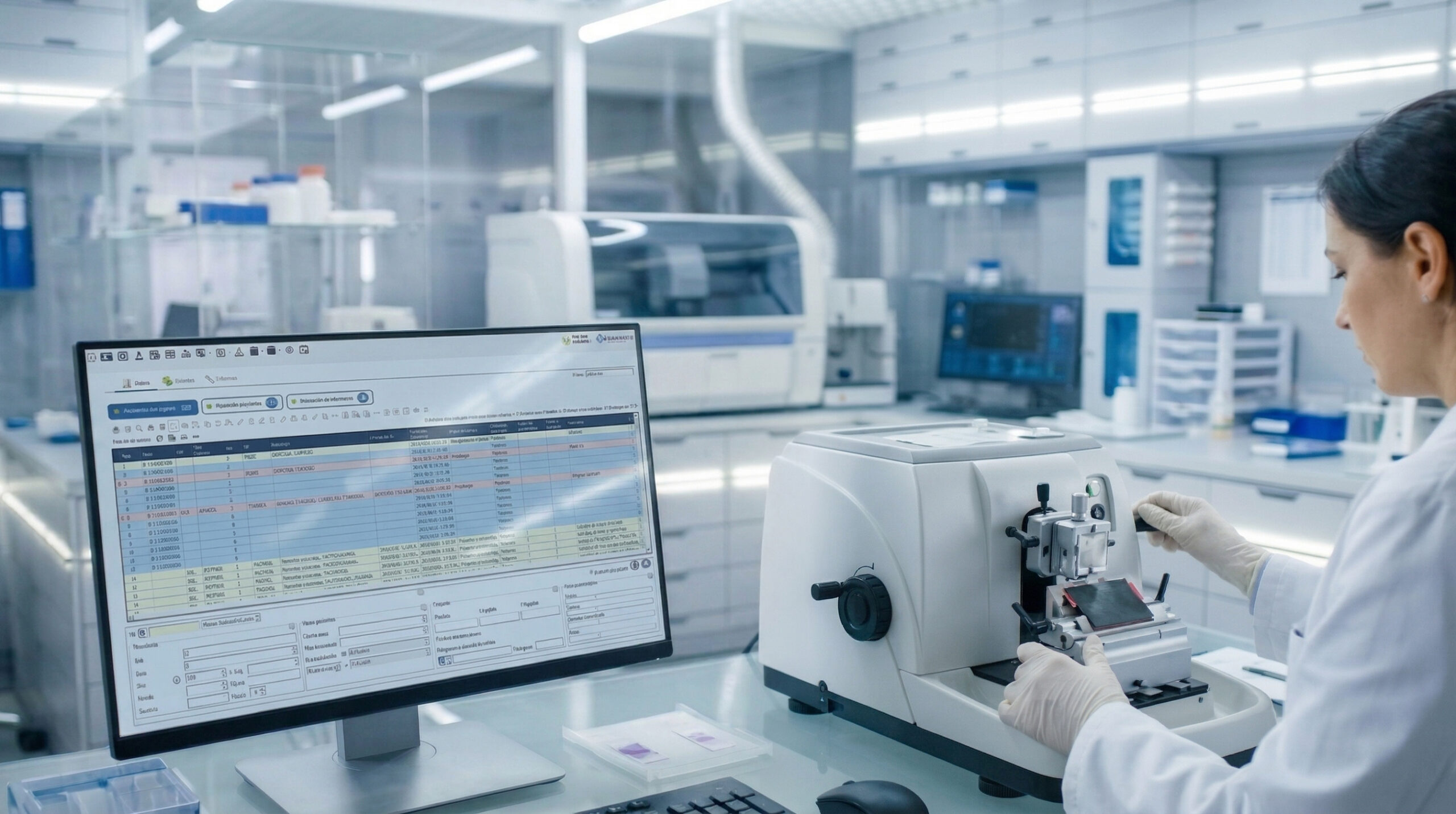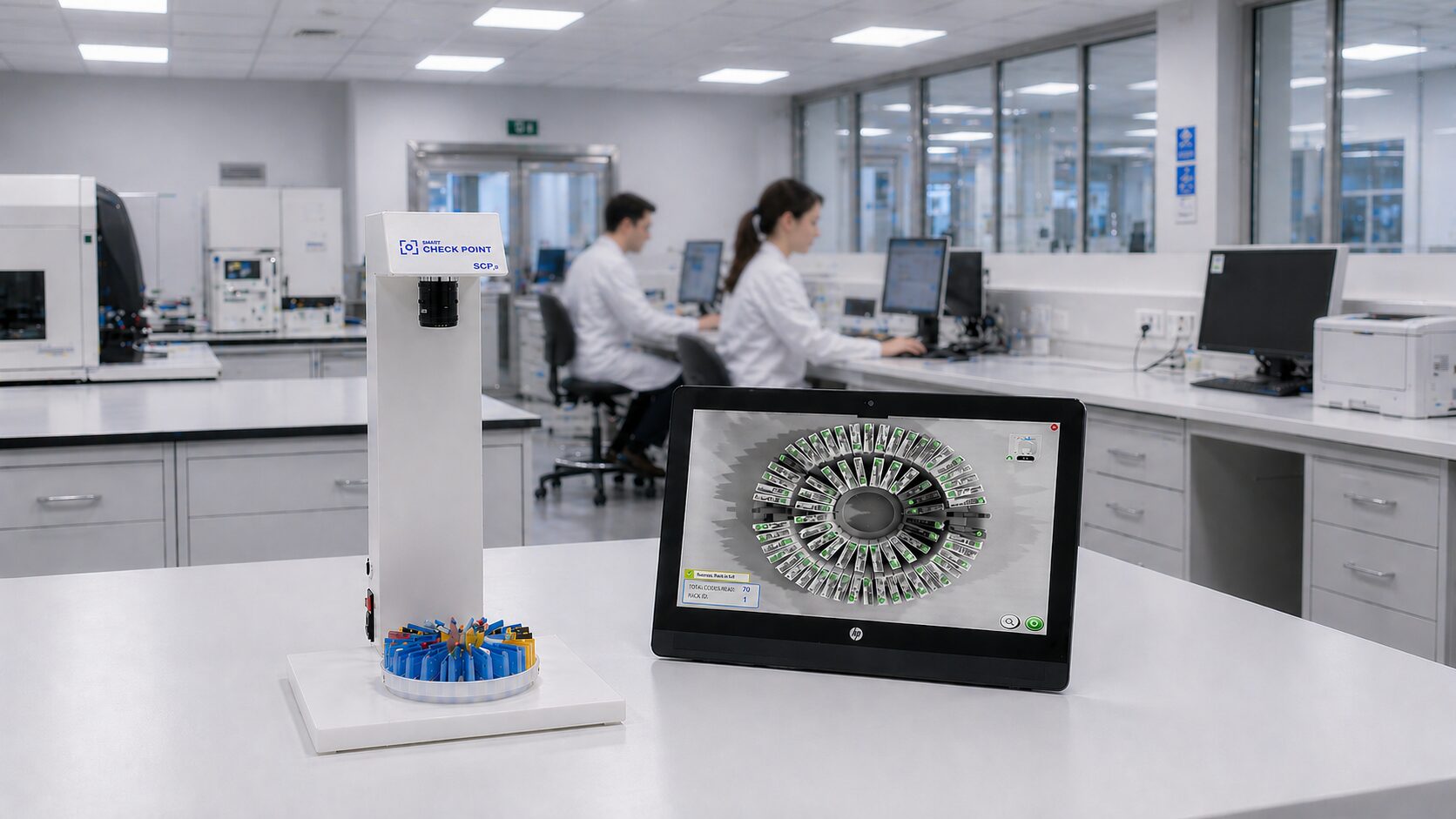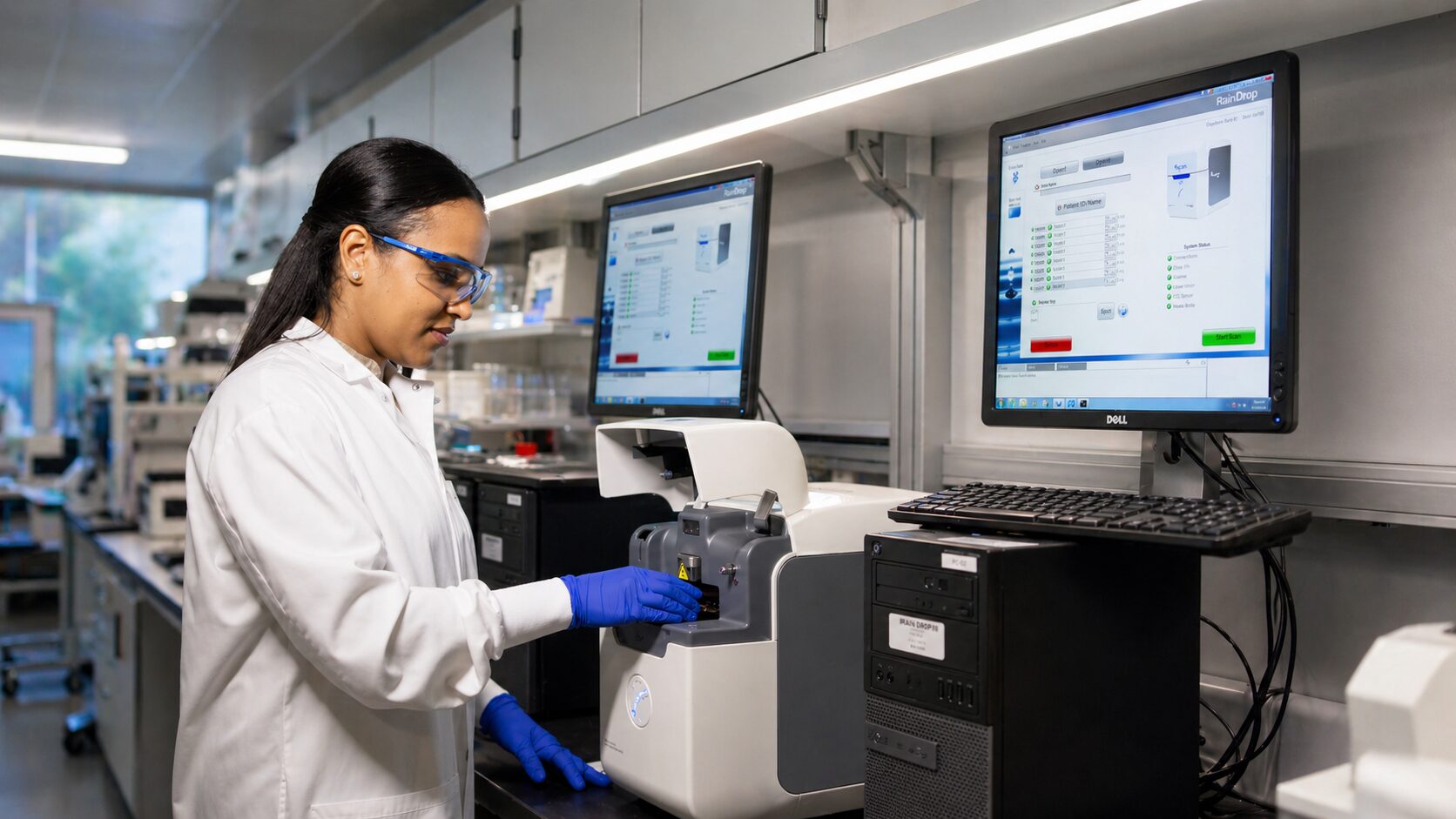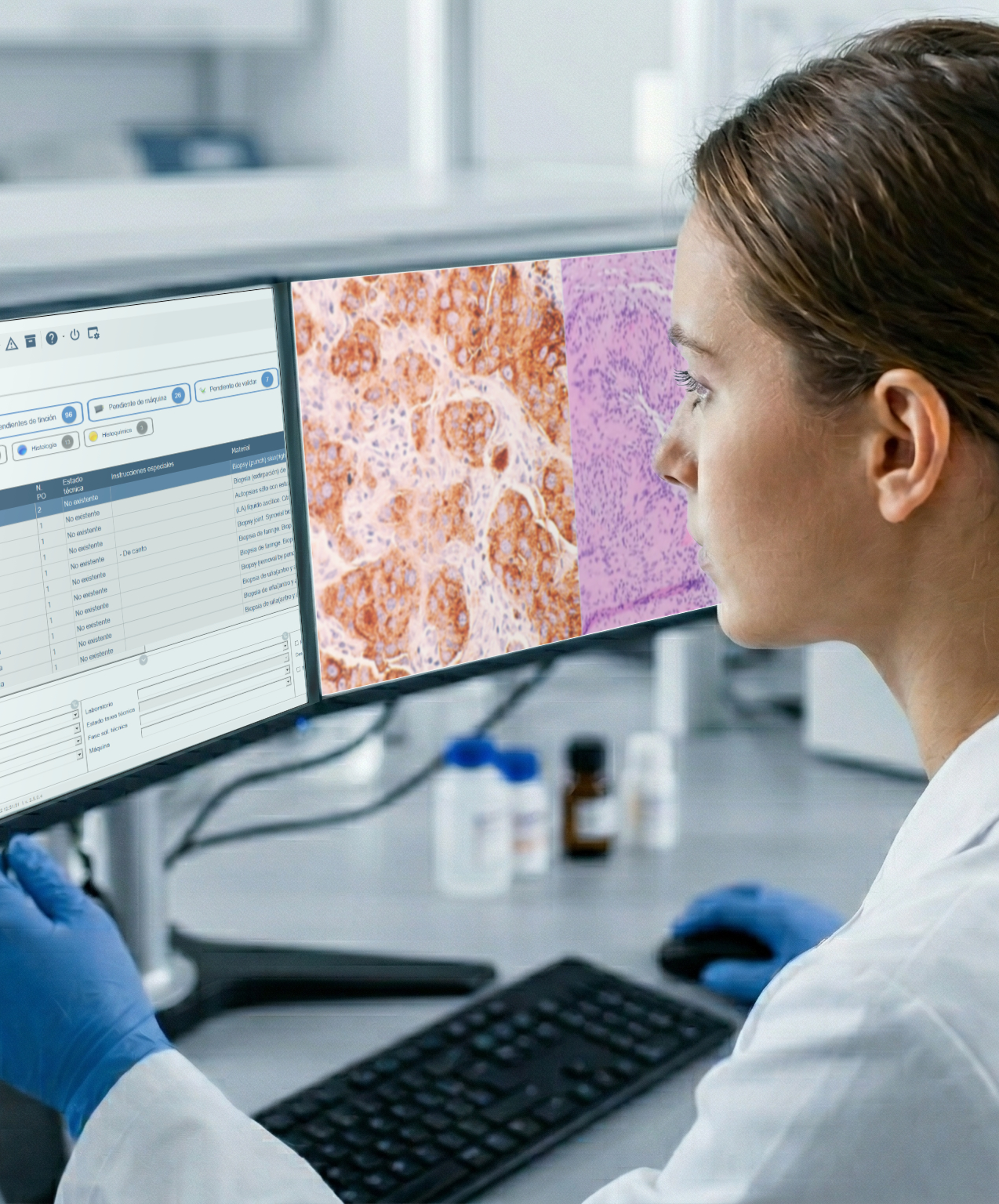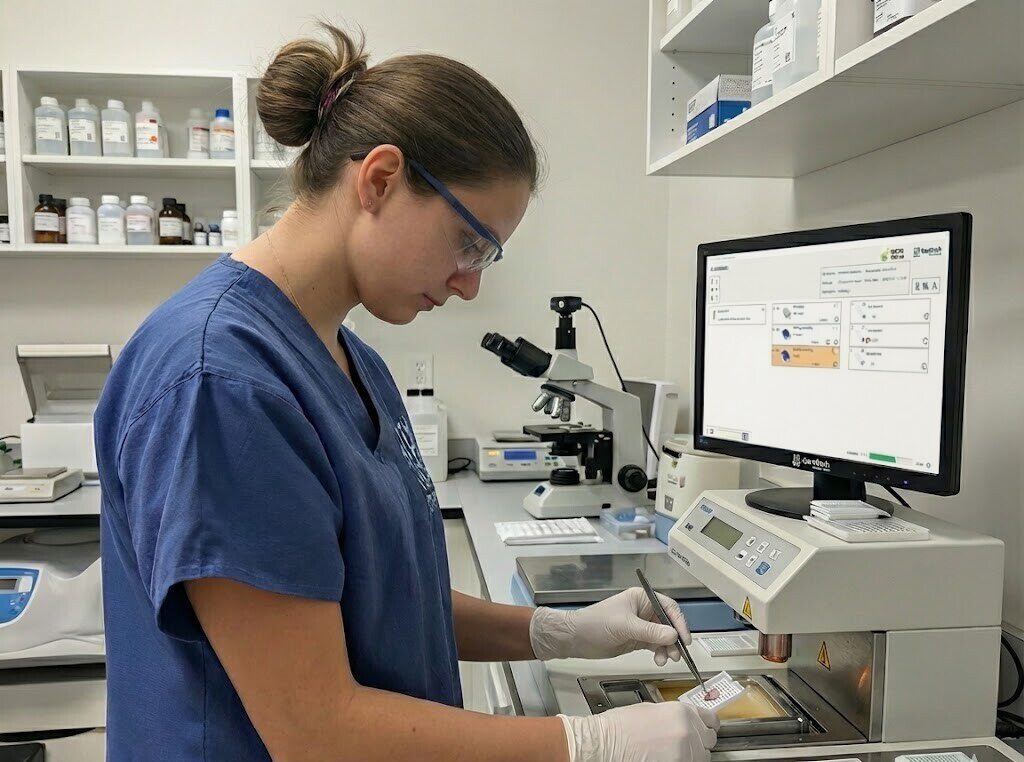
Automation is not just about robots. Its true potential is unlocked when these systems are integrated with the software that manages every stage of the process.
When we talk about laboratory automation, it is easy to picture robotic arms moving specimens. But real progress happens when this equipment is controlled by centralized management software that ensures complete traceability.
Each specimen can be tracked in real time: where it is, which stage of the process it is in, who has handled it, and when it will be ready for diagnosis. This improves efficiency, strengthens safety, and ensures the reliability of the analysis.
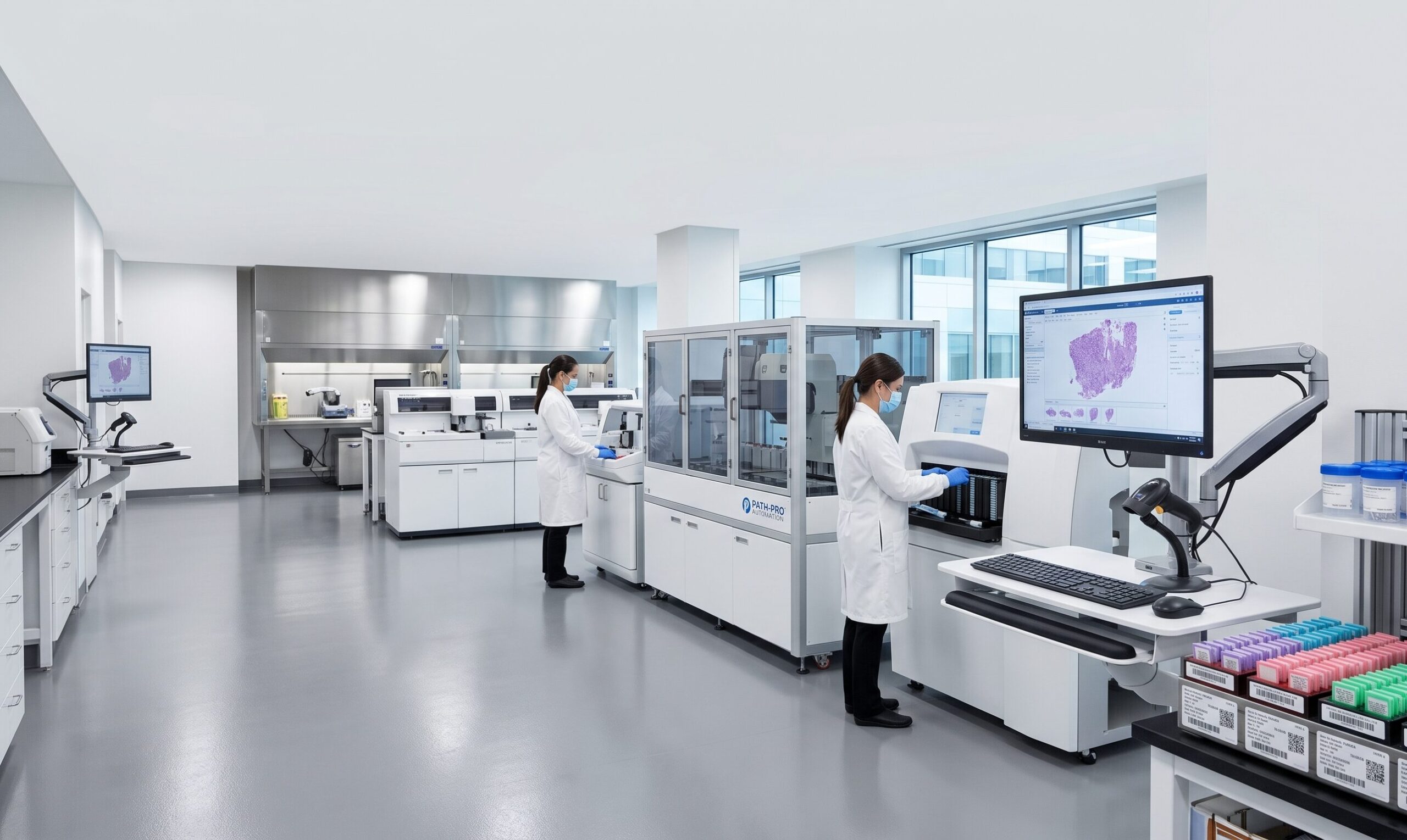

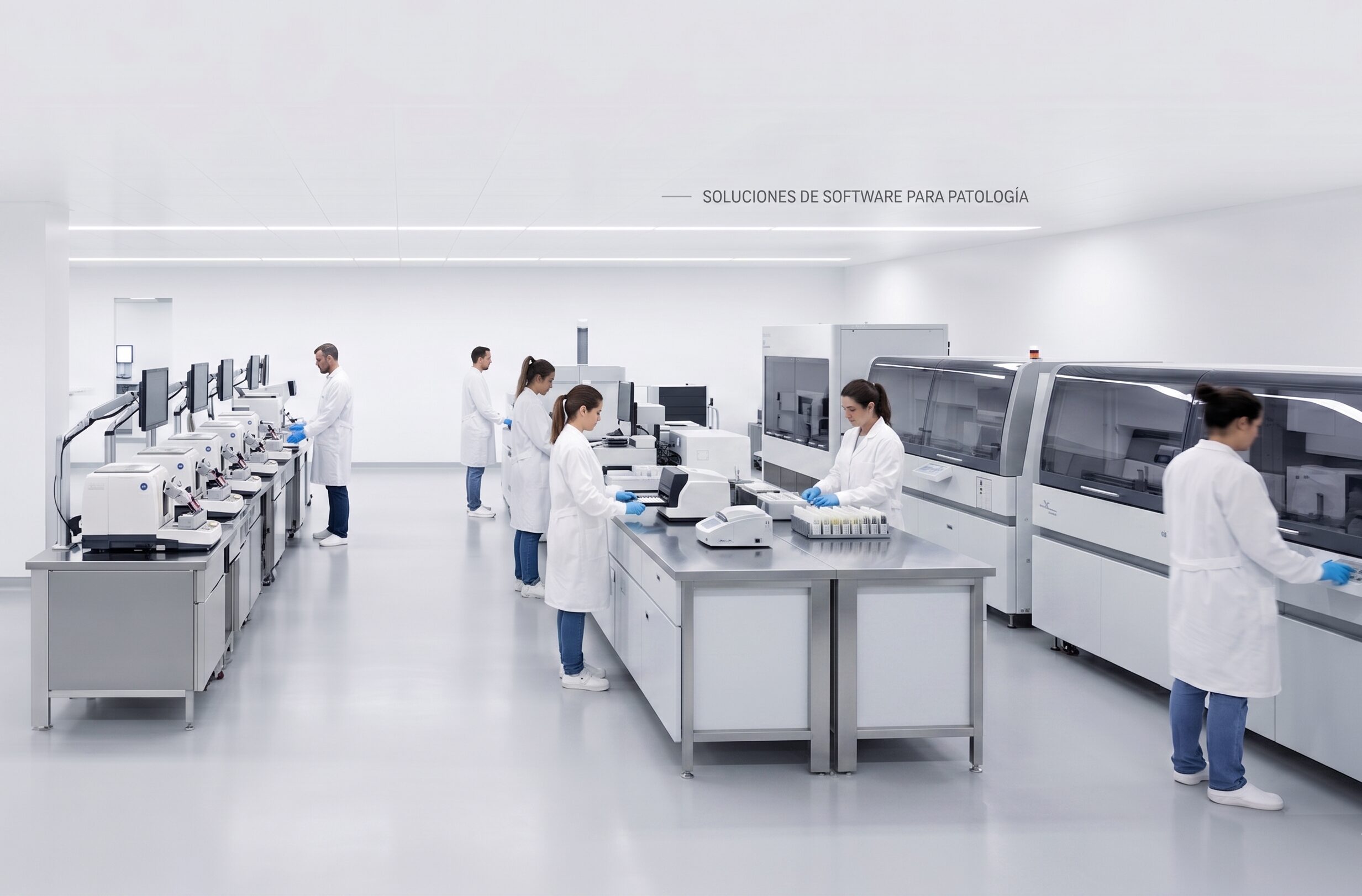
One of the greatest benefits of automation is process standardization. In an anatomic pathology laboratory, where errors can have critical consequences, ensuring consistent results is essential.
Each sample follows the same automated protocol, reducing variability and ensuring reliable diagnoses.
Automated systems record every step of the process, facilitating audits and ensuring compliance with healthcare regulations.
Despite its significant benefits, automation also presents challenges that must be addressed strategically:
Automation is redefining anatomic pathology, but its true impact is achieved when robotic equipment and management software work in perfect synchronization.
Laboratories that fully embrace this integration will improve their operational efficiency while also raising the quality of their diagnoses, with a positive impact on patient care.
On this path toward innovation, technology does not replace the expert; it empowers them with tools that optimize their work and enhance their ability to save lives.
Are you ready to optimize your laboratory with cutting-edge technology? Discover how LIS integration and automation can improve the accuracy and efficiency of your diagnoses. Take the next step today!






Live pitch Esblada Medical: Patología Digital Multicéntrica
Oct. 23 · 12:20 PM